
Tricycle Street Vending Carts: One Platform, Five Menu Formats
A street vendor's first decision is not the brand — it is the menu. We build the same three-wheel cart around five different counters, so the format follows the product instead of the product being forced into one format.
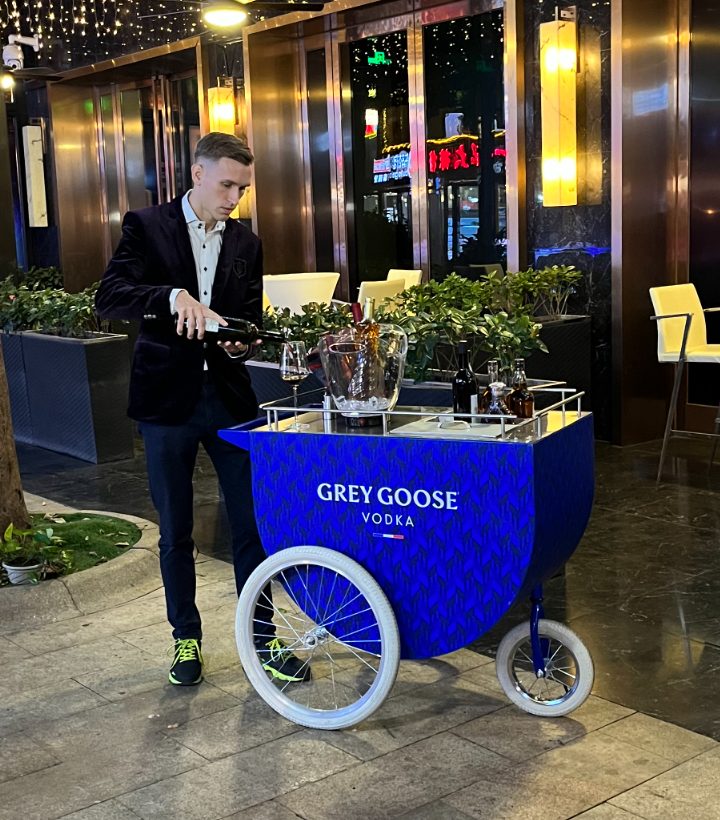
Why operators still choose three wheels
A tricycle cart sits in a useful middle ground. It is small enough to work a pavement, a market aisle or a beachfront path that a van cannot reach, and it is mobile enough to move between two pitches on the same day. For a first outlet, or for a brand testing a neighbourhood, that combination is hard to beat.
Because the platform is compact, the counter layout becomes the whole product. Two carts of the same size can serve completely different menus — and that is why we build the range around the menu first.
The five counter formats
The range covers five configurations, each named after the trade it serves:
- Ice Cream Shop. A serving counter organised around scooping and handing over, with the customer standing at the cart rather than waiting inside.
- Beverage Shop. A counter built for fast, repeated transactions — cups, bottles or cans within reach of the operator's hands.
- Coffee Shop. A working surface for a machine and the movement around it, with the service point facing the pavement.
- Ice Cream & Coffee Shop. A combined layout for operators who want two revenue streams from one pitch, with the two services kept apart enough not to collide.
- Multiple Function Shop. A flexible configuration for traders whose offer changes with the season, the event or the location.
Choosing the format from the menu, not the catalogue
A useful exercise before ordering is to write the menu as a sequence of movements: what does the operator pick up first, where does it go, what does the customer receive, and what happens next. A coffee format fails when the machine and the cup stack are on opposite sides of the counter; a beverage format fails when the stock does not fit under the working surface.
Two questions usually settle it. How many transactions per hour at peak, and how much preparation happens in front of the customer? High-frequency, low-preparation trades want a shallow counter and deep storage. Low-frequency trades with visible preparation can afford a wider, more theatrical counter.
Branding a cart that moves
A cart is a moving surface: seen from the front as customers approach, from the side as they pass, and from behind when it is parked. Decide early which panels carry the brand and which carry the menu, because that decision changes the build.
For a mobile unit, two practical points are worth settling with the fabricator at the start: whether the panels need to be replaceable when the campaign changes, and whether the finish will survive being cleaned daily and parked outdoors.
What to send us with an enquiry
A short brief is enough to start: the menu, the pitch (pavement, market, beach, forecourt), how many hours a day the cart trades, whether power is available on site, and the artwork you already have. From there the counter layout can be drafted against the way the operator actually works.
If you are comparing a tricycle against a kiosk, tell us the site as well — the honest answer sometimes is that a fixed unit will earn more, and it is better to know that before the tooling is cut.
Building a street vending format?
Send the menu and the pitch, and we will suggest the counter layout that fits, with the branding surfaces that make sense for a moving cart.
Or email [email protected]. We reply within 24 hours on business days.